In What Year Were Internment Camps Closed in Canada and Not Used Again Since That Date?
Beginning in early 1942, the Canadian regime detained and dispossessed more than xc per cent of Japanese Canadians, some 21,000 people, living in British Columbia. They were detained under the War Measures Human activity and were interned for the residuum of the Second Earth War. Their homes and businesses were sold past the government to pay for their detention. In 1988, Prime number Government minister Brian Mulroney apologized on behalf of the Canadian government for the wrongs it committed against Japanese Canadians. The government also made symbolic redress payments and repealed the War Measures Act.
Offset in early on 1942, the Canadian government detained and dispossessed more xc per cent of Japanese Canadians, some 21,000 people, living in British Columbia. They were detained under the War Measures Human action and were interned for the rest of the Second World War. Their homes and businesses were sold past the government to pay for their detention. In 1988, Prime Government minister Brian Mulroney apologized on behalf of the Canadian government for the wrongs it committed against Japanese Canadians. The government besides made symbolic redress payments and repealed the War Measures Act.
Background
By the offset of the Second World State of war, Japanese people had long suffered the sting of racism in Canada. Ever since the offset Japanese person, a human being named Manzo Nagano, stepped ashore in New Westminster in 1877, White settlers in British Columbia tried to exclude people whom they considered to be "undesirables." They passed laws to keep Japanese people from working in the mines; to prevent them from voting; and to prohibit them from working on any projection funded by the province.
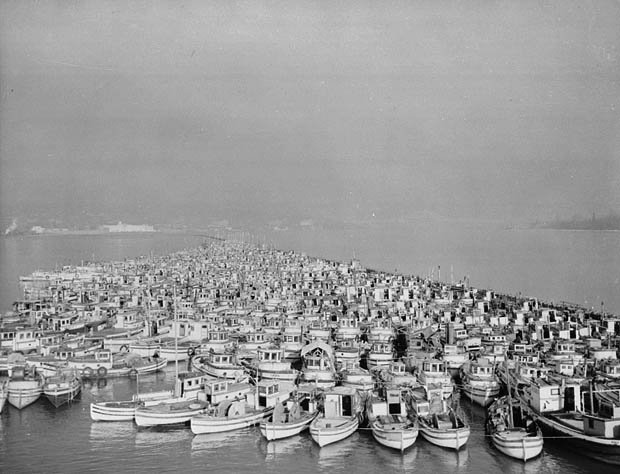
Then came the news, on vii Dec 1941, of Japan's attacks on Pearl Harbor and Hong Kong, where Canadian troops were stationed. (See Canada and the Battle of Hong Kong.) With these shocking events, fears of a Japanese invasion were sparked. Their flames were fanned by a sensationalist printing. Distrust of Japanese Canadians spread along the Pacific Coast. The RCMP moved apace to arrest suspected Japanese operatives. The Purple Canadian Navy impounded one,200 Japanese-owned angling boats. On the recommendation of the RCMP, Japanese newspapers and schools were voluntarily shut down to avert racist backlash.
"From the army point of view, I cannot encounter that Japanese Canadians found the slightest menace to national security," wrote Major-General Kenneth Stuart. Nevertheless, BC politicians were in a rage. They spoke of the Japanese "in the way that the Nazis would have spoken about Jewish Germans," said Escott Reid, a Canadian diplomat. "When they spoke I felt… the physical presence of evil."
Detained, Dispossessed and Dispersed
On 24 February 1942, the federal Chiffonier of Prime number Government minister William Lyon Mackenzie Male monarch issued Society-in-Council P.C. 1486 to remove and detain "any and all persons" from any "protective area" in the state. Those powers were broad enough to utilise to anyone. Simply they were specifically used to target Japanese Canadians along the West Coast. The following calendar week, the British Columbia Security Commission was established. It implemented and carried out Japanese internment.
On xvi March, the first Japanese Canadians were taken from areas 160 km inland from the Pacific declension — accounted a "protected expanse" — and brought to Hastings Park in Vancouver. (Meet Japanese Canadians Held at Hastings Park.) More 8,000 detainees were processed through Hastings Park. Women and children were housed in the Livestock Edifice. All holding that could not exist carried was taken into government custody.
"I was a 22-year-old Japanese Canadian," said Tom Tamagi, "a prisoner of my own country of birth. We were bars inside the high wire fence of Hastings Park just like caged animals."
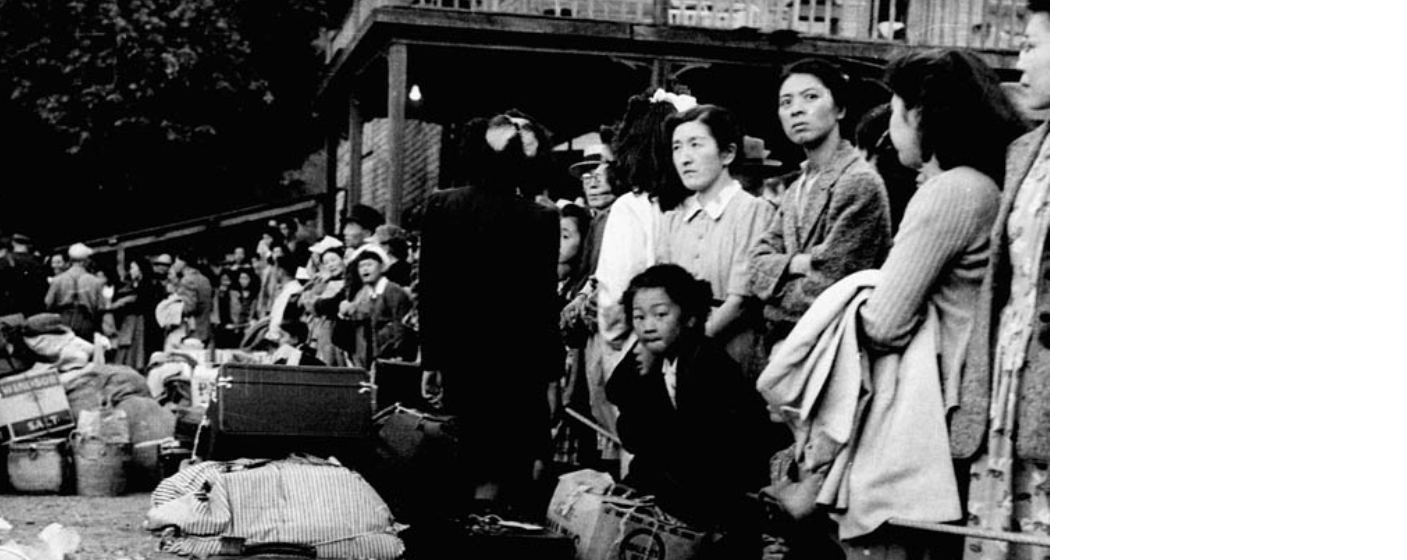
Group of Japanese Canadians who had been interned during the 2d World War, waiting for a train to have them to ships, which volition take them to Nihon.
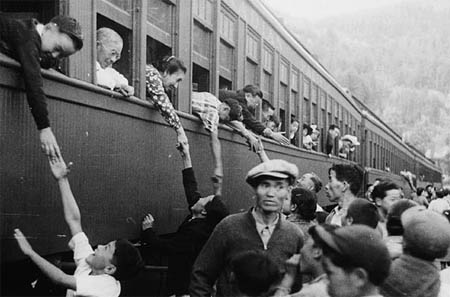
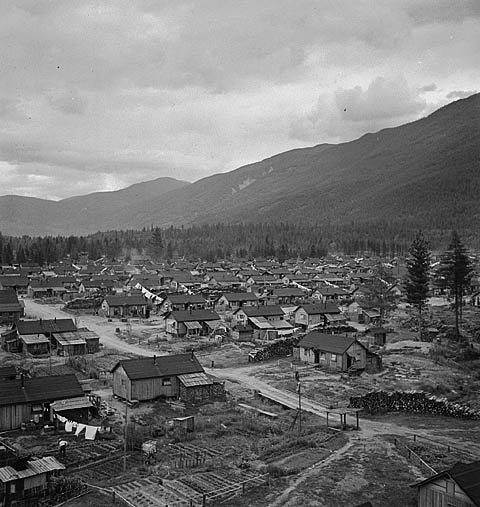
Trains then carried the Japanese detainees to Slocan, New Denver, Kaslo, Greenwood and Sandon — ghost towns in the Kootenays. Others were offered the option of working on sugar beet farms in Alberta and Manitoba (see Sugar Industry), where they would be able to keep their families intact.
Though the camps were not surrounded with spinous wire fences, as they were in the United States, conditions were overcrowded and poor. At that place was no electricity or running water. Those who resisted their internment were sent to prisoner of war camps in Petawawa, Ontario; or to Military camp 101 on the northern shore of Lake Superior.
In a further betrayal, an guild-in-council signed 19 January 1943 liquidated all Japanese property that had been nether the authorities'south "protective custody." Homes, farms, businesses and personal property were sold. The proceeds were used to pay the costs of detaining Japanese Canadians.
Anti-Japanese Racism
Anti-Japanese racism was not confined to British Columbia. Though in need of labour, Albertans did not desire Japanese Canadians in their midst. Alberta carbohydrate beet farmers crowded Japanese labourers into tiny shacks, uninsulated granaries and craven coops; they paid them a pittance for their hard labour.
More than xc per cent of Japanese Canadians — some 21,000 people — were uprooted during the war. The majority were British subjects by nativity. (Earlier 1947, both people built-in in Canada and naturalized immigrants were considered British subjects; in other words, they were citizens of the Commonwealth. Canadian citizenship came into effect in January 1947.)
Fifty-fifty after the war, Mackenzie King continued to bow to the nigh strident demands of the politicians and the citizens he represented. He offered Japanese Canadians two choices: move to Nippon; or disperse to provinces due east of the Rocky Mountains. He never expressed whatever regrets for the handling of Japanese Canadians, during the war or after.

In 1946, most 4,000 former internees chose to leave Canada for bombed-out Japan. Most ii,000 were aging get-go-generation immigrants — 1,300 were children under 16 years of age. The last controls on Japanese Canadians were non lifted until 1948, when they were granted the right to vote. Finally, Canadian guild began to open to the Japanese.
Apology and Redress
The military threat cited to justify the detention of Japanese Canadians never existed outside the anxious imaginations of some British Columbians. Not a single Japanese Canadian was charged with any wrongdoing. Still, some people have been uncomfortable judging the acts of our predecessors from the perspective of retrospect. When Japanese Canadians campaigned for bounty on 29 June 1984, Prime Minister Pierre Trudeau said, "I practise not see how I can apologize for some historic event to which we… were not a political party. We can regret that it happened." He went on to ask where such claims for compensation would end. Indeed, other communities in Canada besides sought redress and apology from the government for its racially motivated policies of the past: Ukrainian Canadians interned during the First Earth War; and Chinese Canadians who paid the head tax, among others.
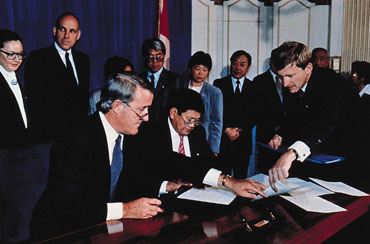
But equally expressed in the April 1947 result ofSaturday Night magazine, "Information technology is the first step which costs; an injustice once performed is fatally easy to echo." On 22 September 1988, Prime Minister Brian Mulroney rose in the House of Commons to apologize on behalf of the Canadian government for the wrongs it committed against Japanese Canadians during wartime. The apology came with symbolic redress payments to individuals and to community funds.
But the most enduring achievement of the Japanese campaign for redress was the abolition of theWar Measures Act, which had provided the legal basis for the removal of the Japanese from their homes. Ultimately, the redress campaign was a strong reminder of the poisonous effects of racism in Canada.
See also Internment in Canada; Interned in Canada: An Interview with Pat Adachi; Hide Hyodo Shimizu; Obasan (novel); Joy Kogawa; David Suzuki; Masumi Mitsui; Racial Segregation of Asian Canadians.
Source: https://www.thecanadianencyclopedia.ca/en/article/japanese-internment-banished-and-beyond-tears-feature
0 Response to "In What Year Were Internment Camps Closed in Canada and Not Used Again Since That Date?"
Post a Comment